Browse Items
489 results for “youth”

Science for Young People -- The Christmas Lecture
A demonstration-rich science talk designed for children and teenagers. I started the Christmas Lectures at the Royal Institution in 1825. Fire, ice, magnets, sparks, bubbles -- real science made visceral. No equations. Just wonder. The Chemical History of a Candle -- six lectures explaining all of chemistry through a single burning candle.


Self-Education Mentoring -- The Bookbinder Path
One-on-one mentoring for anyone without a formal science education who wants to learn. I had no degree, no university, no connections. I had a library and a willingness to work harder than anyone in the room. I will help you build a self-study plan and find your Humphry Davy -- the person who opens the first door.

Electromagnetic Induction Demonstration Kit
Magnets, copper wire coils, galvanometer, and iron rings. I will show you how moving a magnet through a coil generates electricity -- the experiment that powers civilization. On August 29, 1831, I wrapped two coils around an iron ring and discovered that changing the current in one coil induced current in the other.

Creative Thinking Workshop -- The Patent Clerk Method
Small group (max 5). I'll teach you how to do thought experiments: isolate a problem, strip it to essentials, follow the logic to impossible conclusions, then ask why they're impossible. This is how I found special relativity. This is how you solve any problem where the conventional answer feels wrong. Bring a notebook. Bring a problem. Leave with a new way to think.

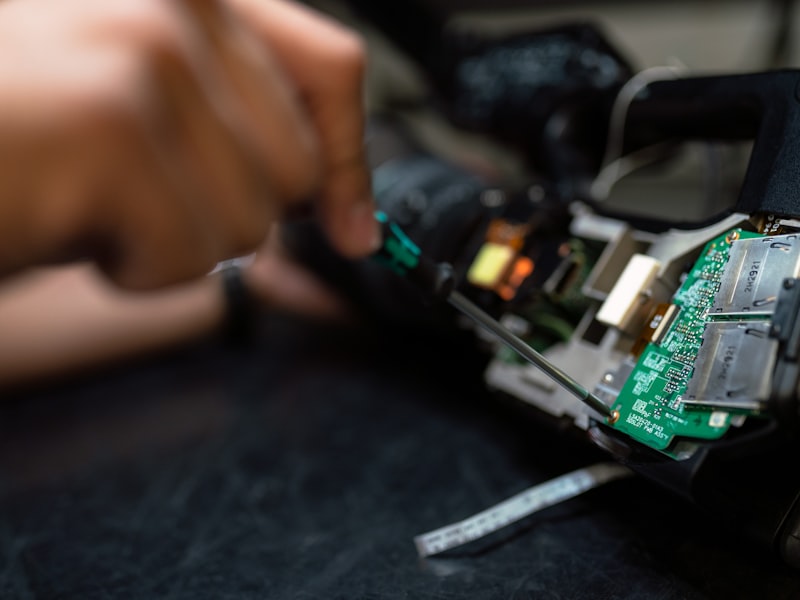
Electricity & Magnetism Workshop -- Fields You Cannot See
Hands-on session. Iron filings on paper over magnets -- watch the field lines appear. Compass needles deflected by current-carrying wires. Electromagnets lifting iron. I will explain how electricity and magnetism are two faces of the same force. James Clerk Maxwell later wrote the math. I gave him the experiments.
First Aid & Wound Care Training
Wound cleaning, bandaging, splinting, infection prevention. Tip: Wash your hands. In 1854, army surgeons did not wash between patients. I made them. The death rate dropped 40 percent. Hygiene is not optional.

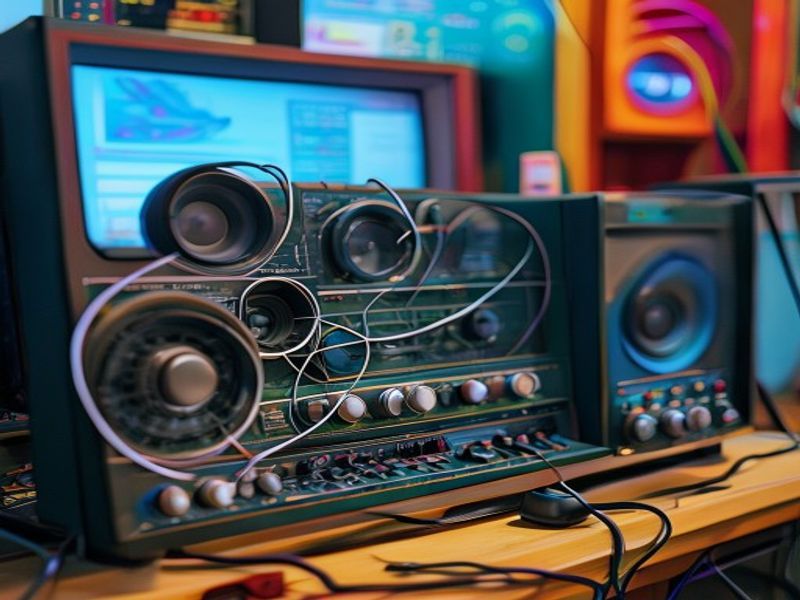
Radio & Wireless Communication Workshop
Hands-on session covering radio fundamentals: frequency, amplitude, modulation, and why your WiFi works. I will explain frequency hopping with a player piano analogy -- the same concept George Antheil and I patented in 1942. You will build a simple AM radio receiver by the end.


Relativity Explained -- Thought Experiments for Everyone
Two-hour session. No equations (well, one equation). I'll explain special and general relativity using the same thought experiments I used to discover them. Riding a beam of light. Trains and lightning strikes. Falling elevators. If you can imagine it, you can understand it. Tip: Relativity is not abstract. Your GPS uses it. Without relativistic corrections, your navigation would be off by 10 kilometers per day.

Writing & Persuasion Workshop -- Poor Richard's Method
Small group (max 6). I'll teach you how to write clearly, persuade effectively, and publish for maximum impact. I wrote Poor Richard's Almanack for 25 years. Sold 10,000 copies a year. 'Early to bed and early to rise' -- that's mine. 'A penny saved is a penny earned' -- also mine. Short, memorable, useful. That's the formula.

Violin (German Make, 1920s, Concert Quality)
My violin. Well, a replica of my favorite one. I named the original Lina. Mozart and Bach -- that's what I play when I'm stuck on a physics problem. The music reorganizes my thinking. If you can play, borrow it. If you can't, I'll give you a beginner lesson. Badly. I'm a better physicist than violinist.

Lead Type Set (Textura Blackletter, Complete Alphabet)
Complete alphabet in Textura blackletter -- the typeface of the Gutenberg Bible. Upper and lower case, numbers, punctuation. Cast in traditional type metal (lead-tin-antimony). Each piece hand-finished. Handle with care; lead is toxic. Wash your hands after use. I didn't know that part.


Typography & Book Design Masterclass
Small group (max 4). Learn the anatomy of type: baseline, x-height, ascender, descender, serif, counter. Learn leading, kerning, and justification. I'll show you why the Gutenberg Bible is still considered one of the most beautiful printed books 570 years later. Spoiler: it's the margins.
85-96 of 489 items (page 8 of 41)