Browse Items
67 results for “welding”

Nation-Building Workshop -- What Comes After the Revolution
Winning the war is the easy part. Building a nation from the wreckage is where most revolutions fail. Constitutions, governance, unifying factions that only agreed on the enemy. I freed five nations and watched them fracture. Tip: Plan for peace while you fight the war, or the peace will be worse than the war.


The Art of Patience -- Strategic Waiting Workshop
How to win by waiting. When to act and when to hold. Reading the political landscape, building position without exposing yourself, striking at the decisive moment. Nobunaga seized the rice cake, Hideyoshi cooked it, I ate it. Tip: If you cannot wait, you cannot win. The patient warrior outlasts the bold one.

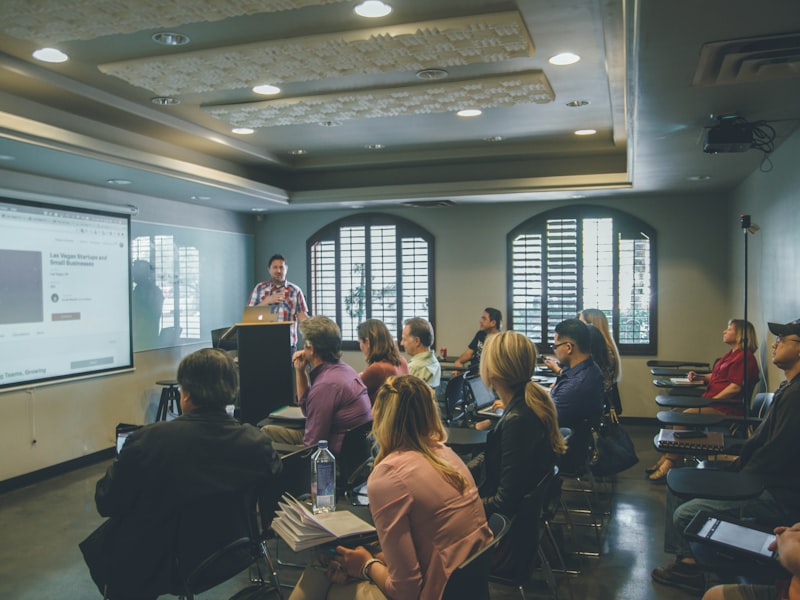
Deterrence Strategy Seminar -- The Cost of Crossing You
How to make yourself too dangerous to attack. Reputation building, calculated displays of power, escalation control. I kept Wallachia independent between two empires through pure deterrence. The Ottomans had ten times my numbers but feared my land. Tip: You do not need to be the strongest. You need to be the most expensive to defeat.


Anti-Colonial Resistance Seminar -- 16 Years Against France
How I fought the French empire for sixteen years with local resources. Scorched earth, strategic retreat, rebuilding in new territory, diplomatic maneuvering with the British. When France took my western empire, I built a new one further east. Tip: If you cannot hold the ground, take the people and the knowledge. Territory can be reconquered. Dead men cannot.


Supply Chain Independence Workshop -- Self-Sufficiency
Building a self-sufficient military supply chain. Local manufacturing, resource management, trade network building, reducing dependence on external suppliers. The French tried to starve me of weapons. I built my own factories. Tip: Every dependency is a vulnerability. Every skill you outsource is a throat your enemy can cut.

Portrait Painting Lesson -- Classical Technique
Before the telegraph, I was a painter. Studied under Washington Allston and Benjamin West. I will teach you classical portrait technique: underpainting in burnt umber, building up layers, glazing for luminosity. My portrait of Lafayette hangs in the Capitol.

Signal Encoding Workshop -- Data Compression Before Computers
Small group (max 4). The principles behind Morse code, Braille, semaphore, and other encoding systems. How do you represent complex information with simple signals? How do you optimize for speed and reliability? Shannon formalized it 100 years later. I figured it out by counting type.
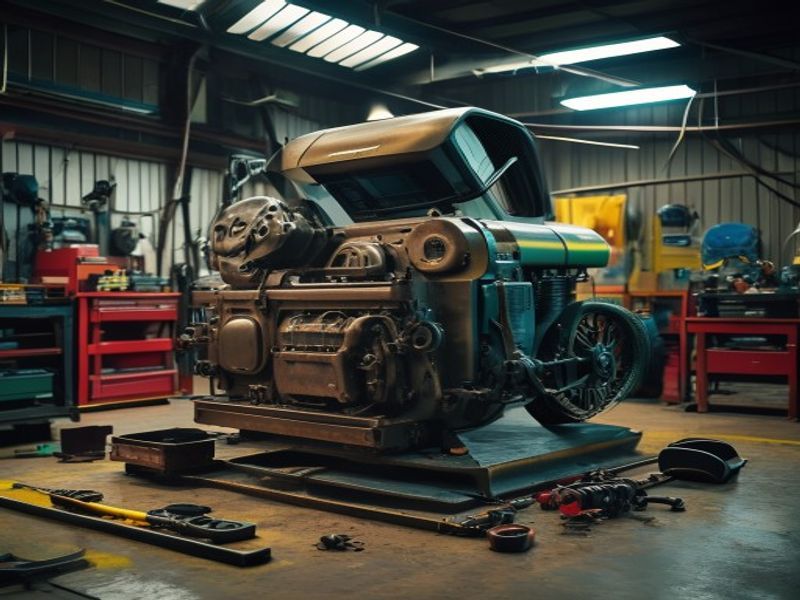
Engine Rebuilding Workshop -- Gasoline Fundamentals
Disassemble and reassemble a small gasoline engine. Pistons, valves, crankshaft, carburetor, ignition. You will understand the four-stroke cycle by touching every part. I built my first engine on the kitchen table. Clara held the fuel line.


Electromagnetic Waves Workshop -- Light Is Electricity
I will demonstrate that light, radio, microwaves, and X-rays are all the same thing. We will measure wavelength and frequency, build simple wave detectors, and see the electromagnetic spectrum laid out physically. Four equations explain all of it. Tip: The universe is more unified than it appears.

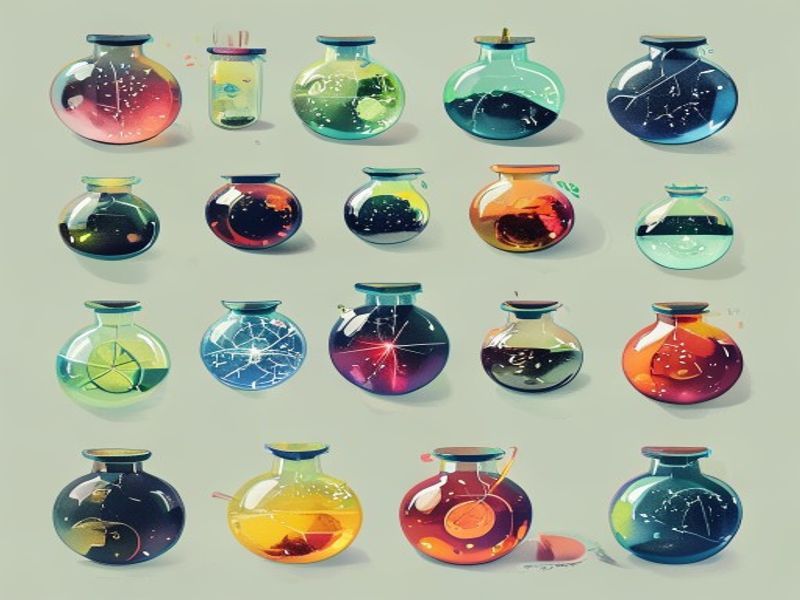
Element Sample Collection (Safe, 30 Elements)
Thirty element samples in labeled vials: iron, copper, tin, sulfur, silicon, carbon (graphite and diamond chip), aluminum, zinc, and more. Each labeled with atomic number, weight, and properties. Hold the building blocks of the universe in your hand. Some are shiny, some are dull, some are gas in sealed ampules.


Braille Reading & Writing Workshop
Learn to read and write Braille. Six dots, 63 combinations, any language. In two hours you will write your name and read simple words by touch. Sighted people benefit too -- it sharpens tactile awareness and spatial thinking.

Accessibility Design Workshop -- Building for Everyone
Small group (max 5). Think about accessibility from the start, not as an afterthought. Blindfold exercises, navigation challenges, communication without sight. When you design for the most constrained user, you improve the experience for everyone. Curb cuts were designed for wheelchairs. Everyone uses them.
25-36 of 67 items (page 3 of 6)